Report Hydrilla
Hydrilla is not in Great Hill Pond — and with your help, we can keep it that way.
Report a SightingAct Quickly
Early Detection Is Our Best Defense
Hydrilla verticillata is one of the most aggressive and damaging invasive aquatic weeds in the world. It is not currently present in Great Hill Pond — but it is actively spreading through Connecticut waterways, and early detection is critical to preventing a devastating infestation.
If you spot something in or near the pond that looks like hydrilla, please contact us immediately. You don't need to be certain — when in doubt, report it. We'd rather investigate and rule it out than miss an early detection.
If you can do so safely, take several photos before leaving the area — different angles, above and below the waterline if possible. Photos significantly speed up identification.
Report a SightingIdentification
What Does Hydrilla Look Like?
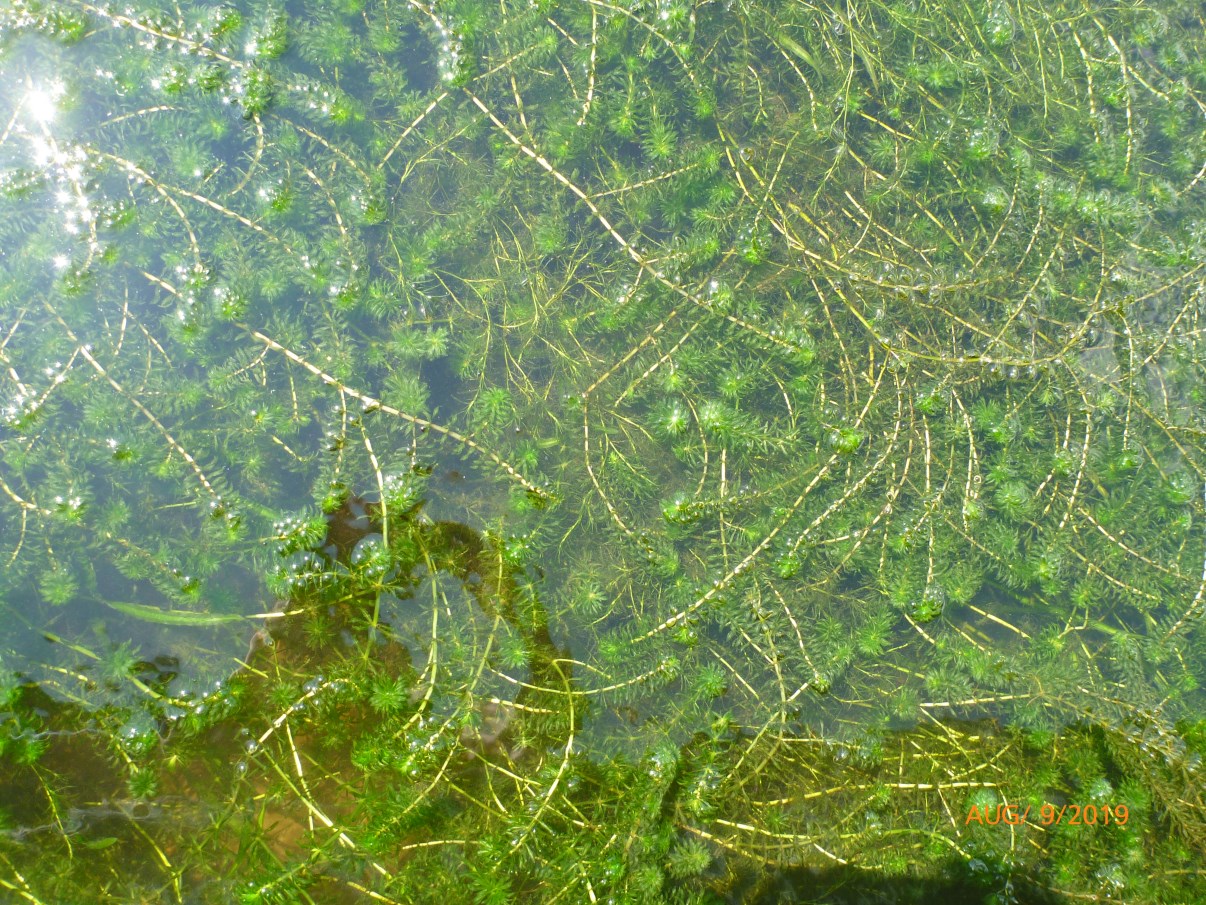
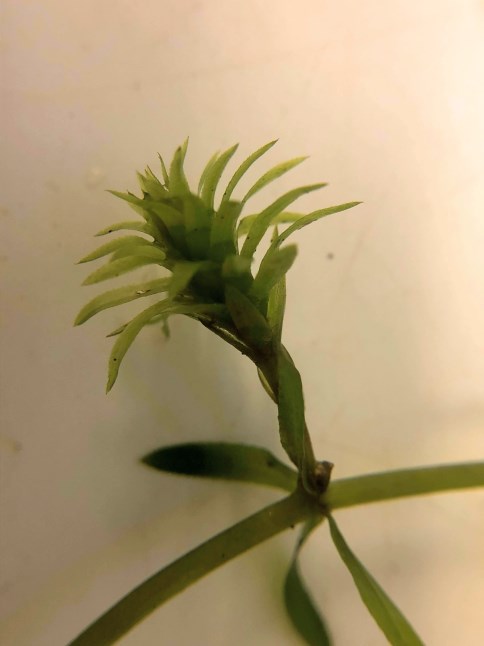
Key Identifying Features
Hydrilla verticillata · Origin: Asia
- Stems: Slender, branched, and up to 25 feet (7.5 m) long
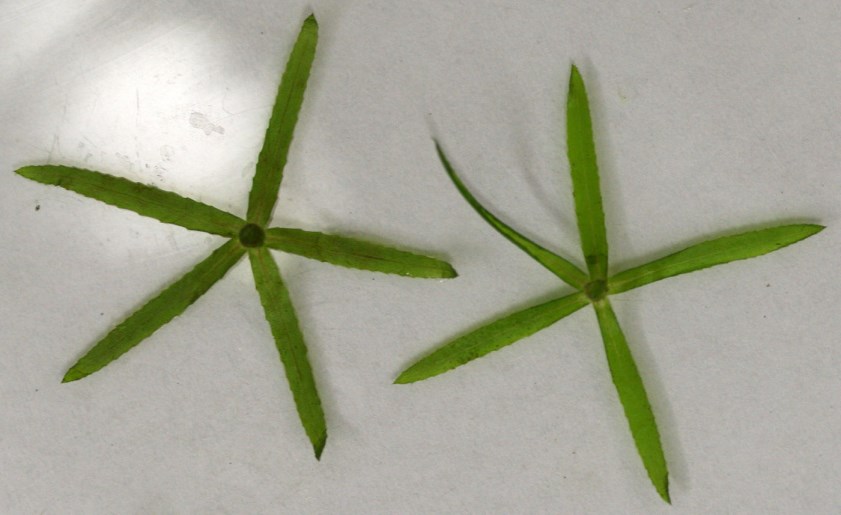
- Leaves: Whorled, approximately ¾ inch (1.5 cm) long; whorls typically have 5 leaves (range 4–8)
- Leaf margins: Visibly toothed — serrated edges you can feel with a fingernail
- Flowers: Female flowers have three translucent petals with reddish streaks; male flowers are white to red
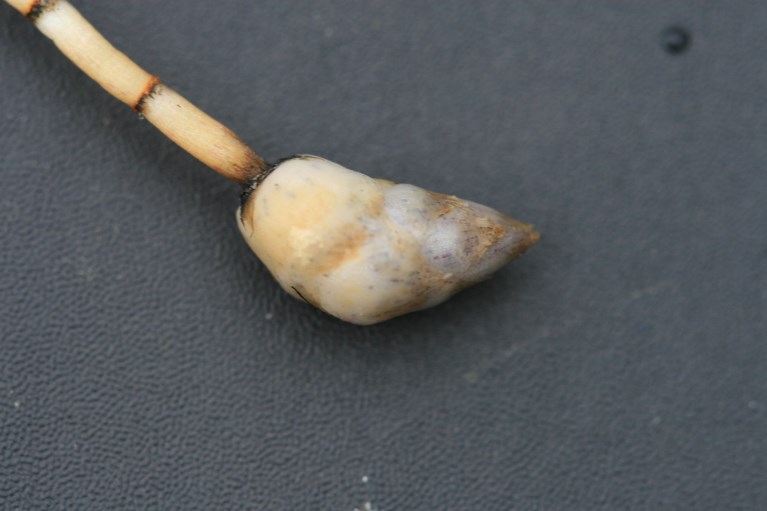
- Tubers: Small potato-like tubers found in the sediment (key feature)
- Turions: Compact budding structures that form along the stem
- Reproduction: Fragmentation, turions, tubers, and seeds
Easily confused with: Native waterweeds (Elodea nuttallii, Elodea canadensis) and Brazilian waterweed (Egeria densa). If you're unsure, report it anyway — we'll help identify it.
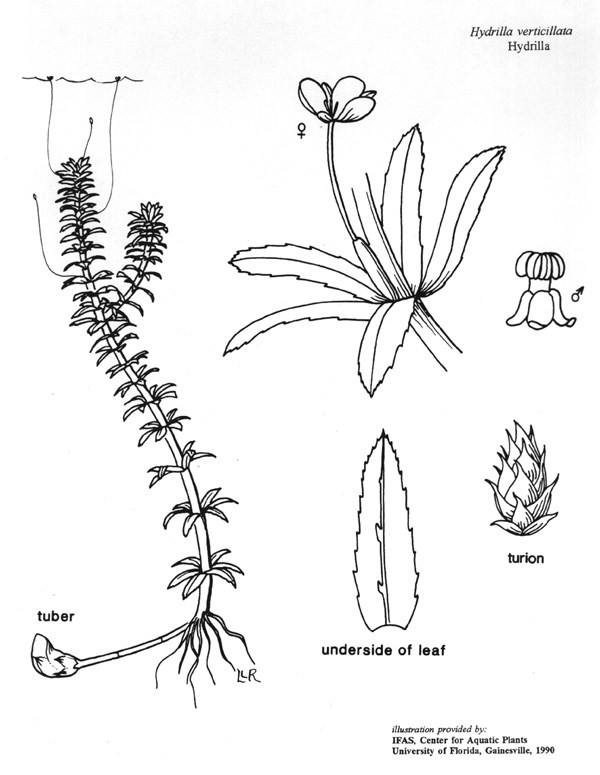
© 1991 University of Florida, Center for Aquatic and Invasive Plants
The Threat in Connecticut
Hydrilla in the Connecticut River
The Connecticut Agricultural Experiment Station Invasive Aquatic Plant Program (CAES IAPP) discovered a new strain of hydrilla in the Connecticut River in 2016. Hydrilla is among the most troublesome invasive aquatic plants in Florida and other southern states. It crowds out native vegetation, harms fisheries, sickens wildfowl, impedes recreation, and reduces property values.
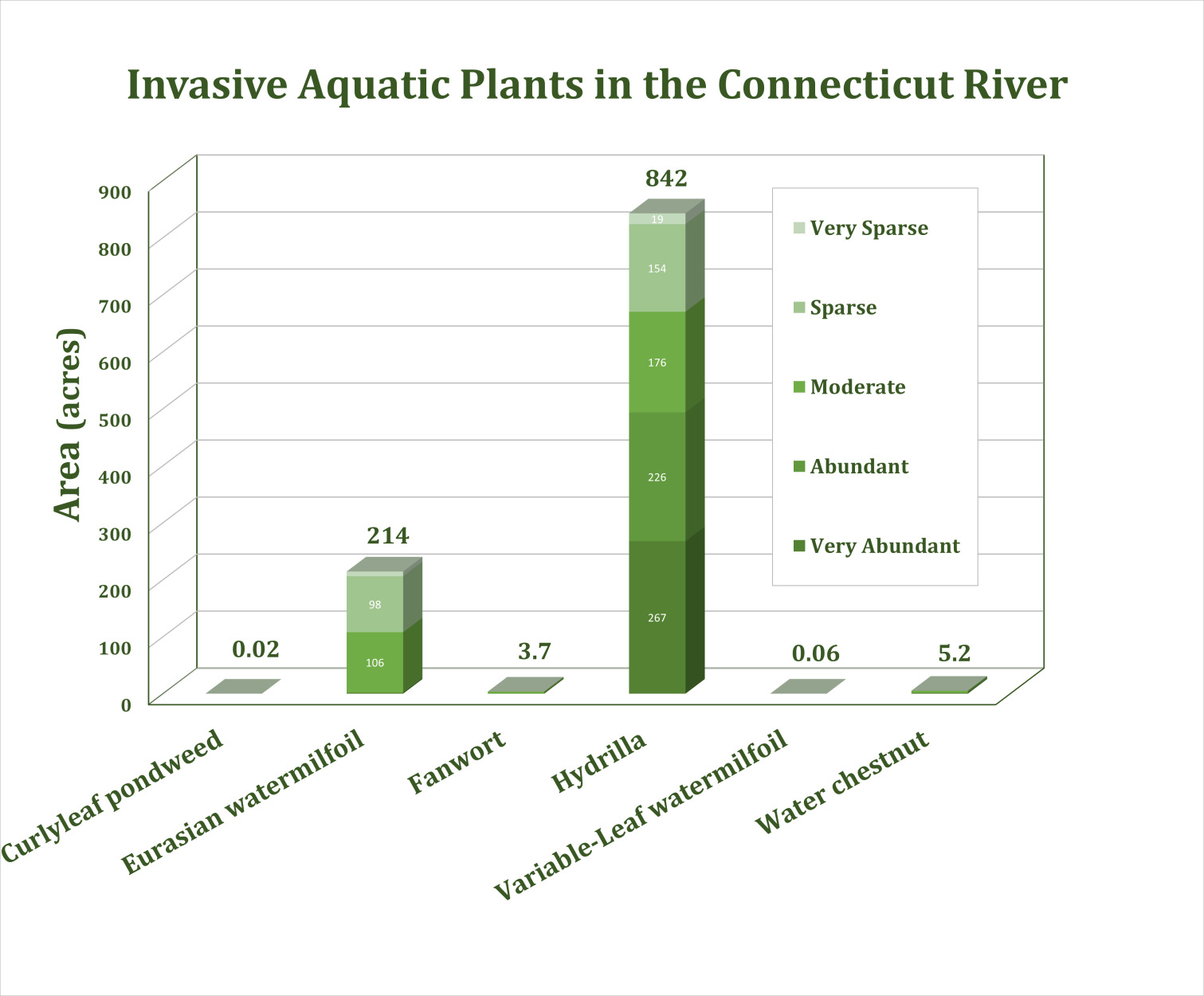
CAES IAPP surveys from 2019–2022 found 842 acres of hydrilla from Agawam, MA to within a mile of Long Island Sound. Large dense patches were common in most coves, tributaries, and shallows along the river's mainstem. In some areas, hydrilla spread out over the surface making navigation nearly impossible. Finding such dense stands of hydrilla in a northern state is alarming. CAES IAPP has found small hydrilla populations in several CT lakes, but these do not compare to the extensive areas in the Connecticut River.
Native eel grass beds are extensive throughout the river and create critical habitat for juvenile fish and other aquatic organisms. Hydrilla is encroaching on these eel grass beds with uncertain consequences.
The Connecticut River hydrilla is genetically distinct from hydrilla found anywhere else. Unlike other strains it has yet to be observed sprouting from potato-like tubers — turions, fragments, and possible perennial root systems appear to be its primary mode of reproduction. This may actually offer hydrilla an advantage, since tubers can remain in the sediment for years and evade control.
There is great concern that the Connecticut River hydrilla could spread to other bodies of water by boats, canoes, kayaks, and other equipment that can transport plant fragments to new locations. Education efforts are underway to ensure those using the Connecticut River are aware of the problem and take appropriate precautions.
Clean. Drain. Dry.
Any time you take your watercraft out of the Connecticut River or any water body where hydrilla may be present, follow these steps before launching anywhere else:
- Clean all equipment — remove any visible plant material before leaving the launch area
- Drain live wells, bilges, and any water-holding compartments
- Dry everything completely before your next launch
If you've recently used your boat or equipment in the Connecticut River or another potentially infested waterway, inspect it carefully before putting it in Great Hill Pond — and report anything suspicious immediately.
Contact Friends of Great Hill PondIf You See It
What to Do If You Spot Hydrilla
Don't Disturb It
Do not pull it out, move your boat through it, or disturb the area. Hydrilla spreads easily through fragments — even a small broken piece can establish a new colony.
Note the Location
Mark the location as precisely as you can — GPS coordinates, a landmark, or a clear description of where on the pond you saw it.
Take a Photo If Possible
A photograph helps with identification. Focus on the whorled leaves and any growth visible above or just below the water surface.
Contact Us Immediately
Use our contact form to report the sighting. Include your location, any photos, and a description of what you saw. We will respond as quickly as possible.
Our Response
How Friends of Great Hill Pond Will Respond
Friends of Great Hill Pond takes hydrilla reports seriously and will act immediately. Our formal rapid-response protocol guides us through verification of the identification, notification of the Connecticut Agricultural Experiment Station Invasive Aquatic Plant Program (CAES IAPP) and relevant state authorities, and coordination of rapid response measures to contain and eliminate any infestation before it can establish.
Early detection dramatically improves the odds of successful control. Your report — even an uncertain one — could be the difference between a contained incident and a major infestation that takes years and significant resources to address.
Read the full hydrilla rapid-response protocol that Friends of Great Hill Pond will follow when a sighting is reported.
View Response Protocol (PDF)External Resources
Learn More About Hydrilla
- Explore a map of hydrilla in the Connecticut River Basin — CAES IAPP interactive map
- Watch a video describing the hydrilla invasion on the Connecticut River — CAES IAPP
- Read the CAES report on hydrilla and other aquatic plants on the Connecticut River — Connecticut Agricultural Experiment Station, Bulletin 1084
- Find out more about hydrilla and steps to slow its spread — Connecticut River Conservancy
References
- Connecticut Agricultural Experiment Station Invasive Aquatic Plant Program. Connecticut's Invasive Aquatic Plant, Clam, and Mussel Identification Guide. Bulletin 1087. Download PDF
- Friends of Great Hill Pond. Hydrilla Rapid Response Protocol. Download PDF